
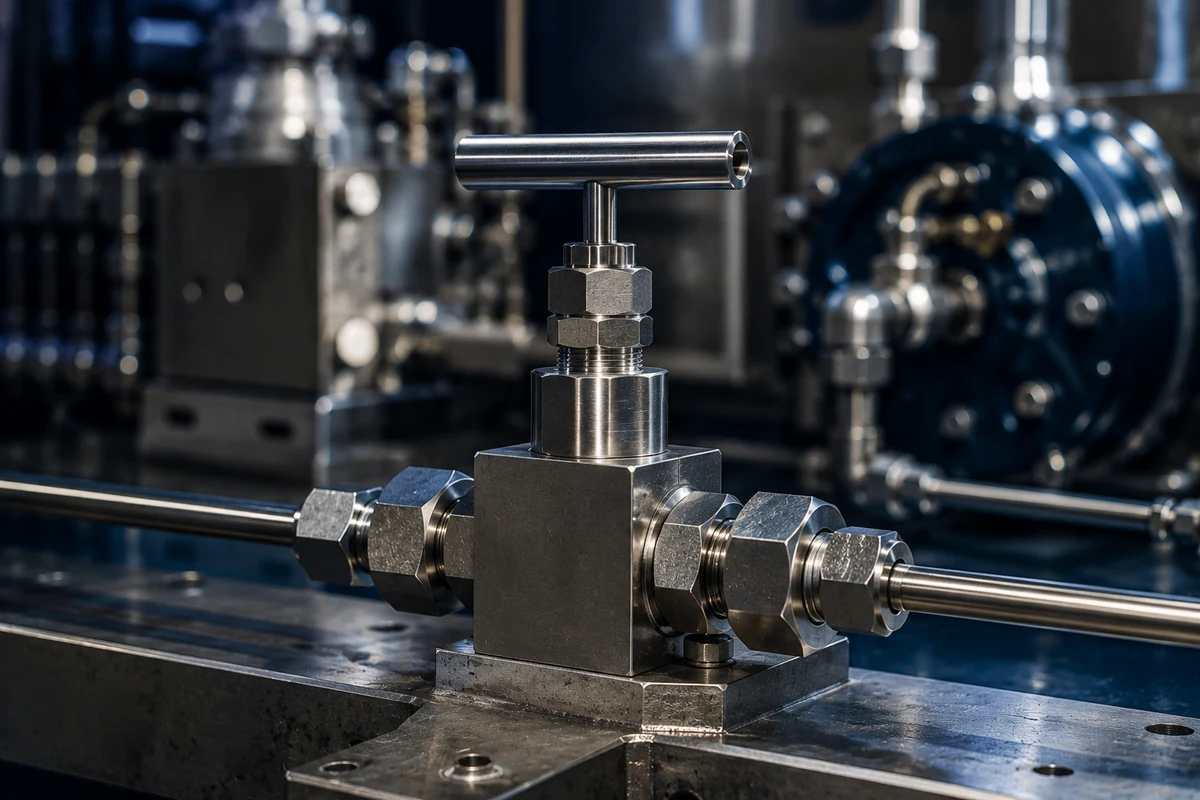
1. Pressure Vessel Geometry and Wall Thickness
Valves operating up to 10,000 PSI must be designed as thick-walled pressure containment vessels. Key design factors include:
- Barstock vs. Casting Integrity: High-pressure instrumentation bodies are machined from solid forged barstock (SS316, Monel, Hastelloy) to avoid internal casting porosity, shrinkage voids, and grain boundary inclusions.
- Burst Safety Margins: Pressure containment design typically incorporates minimum design safety factors (often 4:1 against nominal design pressure) to prevent catastrophic rupture during hydraulic pressure surges.
2. Stem Seal & Packing Architecture
The valve stem represents the dynamic penetration through the pressure boundary and is the primary potential leak path:
- Below-Thread Packing: High-pressure needle valves position the stem packing below the actuation threads. This isolates thread lubricants from process media and prevents process fluids from washing away thread grease.
- Back-Seating Function: A machined shoulder on the stem forms a metal-to-metal seal against the valve bonnet in the fully open position, providing a secondary barrier and reducing packing pressure load.
Engineering Note: Maximum working pressure ratings are temperature dependent. As operating temperature rises, the allowable tensile stress of the alloy decreases, requiring corresponding derating curves.
3. Testing & Verification Procedures
Before deployment in critical high-pressure loops, each valve undergoes structured factory acceptance verification:
- Hydrostatic Body Testing: Tested with liquid media at 1.5× the rated working pressure to verify shell containment.
- Pneumatic Seat Testing: Conducted with dry nitrogen or clean air at low and high differential pressures to verify bubble-tight seat shut-off.
4. Conclusion
Designing and manufacturing high-pressure valves requires uncompromising precision in CNC machining, metallurgical traceability, and disciplined quality control.