
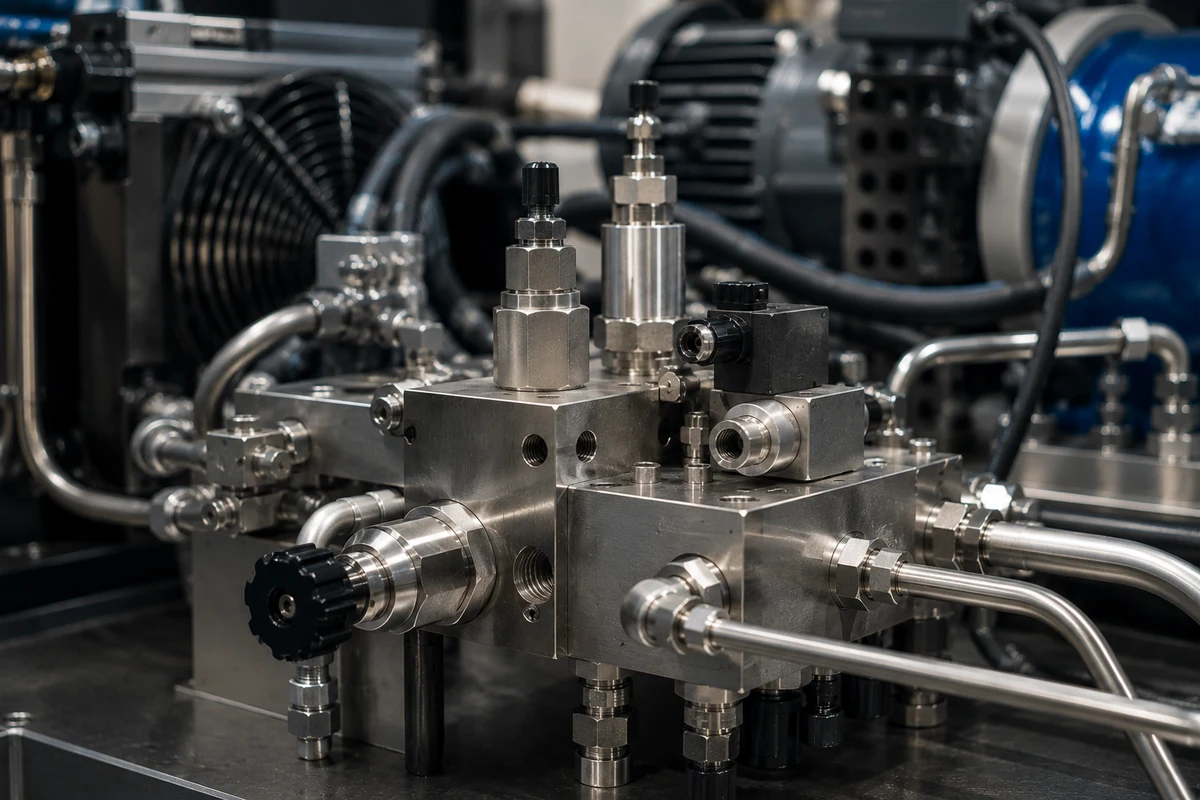
1. Hydraulic Logic and Shuttle Valve Routing
Shuttle valves perform an automatic pneumatic or hydraulic "OR" logic function in control circuits:
- Working Principle: Two input ports and one common output. A floating internal shuttle ball or spool automatically shifts toward the lower-pressure inlet, directing fluid exclusively from the higher-pressure source to the actuator or pilot line.
- Redundant Power Systems: Allows automatic changeover between primary electric HPU supply and auxiliary manual emergency hand pumps without cross-feeding between sources.
2. Emergency Hand Pumps and Auxiliary Actuation
In the event of total electrical or pneumatic failure on offshore platforms or remote wellheads, manual hydraulic hand pumps provide high-pressure fluid delivery to open emergency safety valves or charge accumulators up to design working pressures.
System Design Practice: Always incorporate a dedicated check valve and thermal relief valve at the outlet of manual hand pumps to protect the pumping mechanism against line pressure surges.
3. Flow Control and Cylinder Deceleration
Fine metering flow control valves regulate fluid exit rates from heavy hydraulic cylinders, preventing cavitation, shock loads, and mechanical shuddering during rapid directional changes.
4. Conclusion
Selecting precision hydraulic components—including shuttle valves, interface valves, and check valves—ensures deterministic logic execution and fail-safe operation in hydraulic power circuits.